
There’s something magical about coming home to the aroma of a perfectly cooked meal that’s been simmering all day. I’ll never forget the first time I tried vegetarian crockpot recipes—I was skeptical that plant-based ingredients could develop such deep, rich flavors without constant stirring or monitoring. But when I lifted that lid after eight hours, I was absolutely blown away. The beans were creamy, the vegetables were tender, and the spices had melded into something truly special.
That experience transformed how I approach weeknight cooking. Slow cookers are genuinely perfect for vegetarian crockpot recipes because vegetables, legumes, and grains benefit enormously from gentle, extended cooking. The low, steady heat coaxes out natural sweetness from vegetables and allows spices to permeate every ingredient.
In this guide, you’ll discover why vegetarian crockpot recipes are a game-changer, learn which ingredients work best, and get detailed meal ideas that’ll make your slow cooker your most-used kitchen appliance.
According to the USDA’s food safety guidelines, slow cookers are a safe and effective method for cooking when used properly.
JUMP TO
Table of Contents
Vegetarian Crockpot Recipes
Ingredients
Method
- Sauté aromatics (optional but recommended): Heat oil in a skillet over medium heat. Add onion and cook until softened, about 5 minutes. Add garlic and ginger, cook for 1 minute until fragrant. Add curry powder, cumin, coriander, turmeric, and cayenne. Stir for 30 seconds until spices are toasted.
- Add to slow cooker: Transfer the onion-spice mixture to the slow cooker (or add raw onions, garlic, ginger, and spices directly if skipping step 1).
- Add vegetables: Add sweet potatoes, cauliflower, bell pepper, and chickpeas to the slow cooker.
- Mix liquids: In a bowl, whisk together coconut milk, vegetable broth, diced tomatoes (with juice), and tomato paste. Pour over vegetables.
- Season: Add salt and stir everything to combine well.
- Cook: Cover and cook on LOW for 6-7 hours or HIGH for 3-4 hours, until sweet potatoes are tender.
- Add peas: Stir in frozen peas during the last 15-20 minutes of cooking.
- Adjust seasoning: Taste and adjust salt and spices as needed. For a thicker curry, mash some of the sweet potatoes against the side of the slow cooker.
- Serve: Garnish with fresh cilantro and serve over basmati rice with naan bread on the side.
Notes
- Can substitute vegetables based on preference (try green beans, carrots, or spinach)
- For a creamier curry, add an extra ½ cup coconut milk
- Curry tastes even better the next day as flavors develop
- Freezes well for up to 3 months
- To make it spicier, increase cayenne or add fresh chili peppers
- Can use store-bought or homemade curry powd
Why Vegetarian Crockpot Recipes Work So Well
The slow cooker isn’t just convenient—it’s actually scientifically ideal for plant-based cooking. Here’s why vegetarian crockpot recipes consistently deliver outstanding results.
Slow cooking brings out natural taste: When vegetables cook slowly at low temperatures, their natural sugars caramelize gently, creating depth without bitterness. Carrots become sweeter, tomatoes develop umami richness, and onions turn mellow and almost buttery. This gradual flavor development is something you simply can’t rush on the stovetop.
Minimal prep and less cleanup: Most vegetarian crockpot recipes require basic chopping, then everything goes into one pot. No standing over a hot stove, no multiple pans to wash. I typically spend 15 minutes in the morning chopping vegetables, dump everything in the crockpot, and return to a complete meal.
Great for busy days and batch cooking: A standard six-quart crockpot produces enough food for four to six servings, making vegetarian crockpot recipes perfect for meal prep. Sunday afternoon prep means Tuesday’s dinner is already done.
Basic Ingredients Used in Vegetarian Crockpot Recipes
Understanding which ingredients perform well in slow cookers helps you improvise confidently and avoid disappointing results when making vegetarian crockpot recipes.
Vegetables that hold texture: Root vegetables are your best friends in vegetarian crockpot recipes. Potatoes, sweet potatoes, carrots, parsnips, and turnips maintain structure even after hours of cooking. Winter squash like butternut holds up beautifully. Cauliflower and broccoli work well if added during the last hour. However, save delicate greens like spinach and kale for the final 20 minutes.
Plant proteins: Dried beans become incredibly creamy in the crockpot—kidney beans, black beans, pinto beans, and chickpeas all work wonderfully in vegetarian crockpot recipes. Brown and green lentils maintain their shape, while red lentils break down into a thick, stew-like consistency. Firm or extra-firm tofu can be added halfway through cooking. Tempeh adds a nutty flavor and holds together well during long cooking.
Grains that cook well slowly: Whole grains thrive in vegetarian crockpot recipes. Brown rice, wild rice, farro, and pearl barley all develop tender, fluffy textures without constant monitoring. Quick-cooking grains like white rice and quinoa should be added in the final 30-45 minutes. Steel-cut oats are phenomenal for overnight breakfast preparations.
Spices and herbs: Hearty dried herbs like thyme, rosemary, oregano, and bay leaves intensify beautifully during slow cooking. Whole spices such as cumin seeds, coriander seeds, and cinnamon sticks release flavor gradually. Save delicate fresh herbs like basil, cilantro, and parsley for stirring in just before serving.
Easy Vegetarian Crockpot Recipes for Beginners
If you’re new to slow cooking, these straightforward vegetarian crockpot recipes build confidence and deliver satisfying results every time.
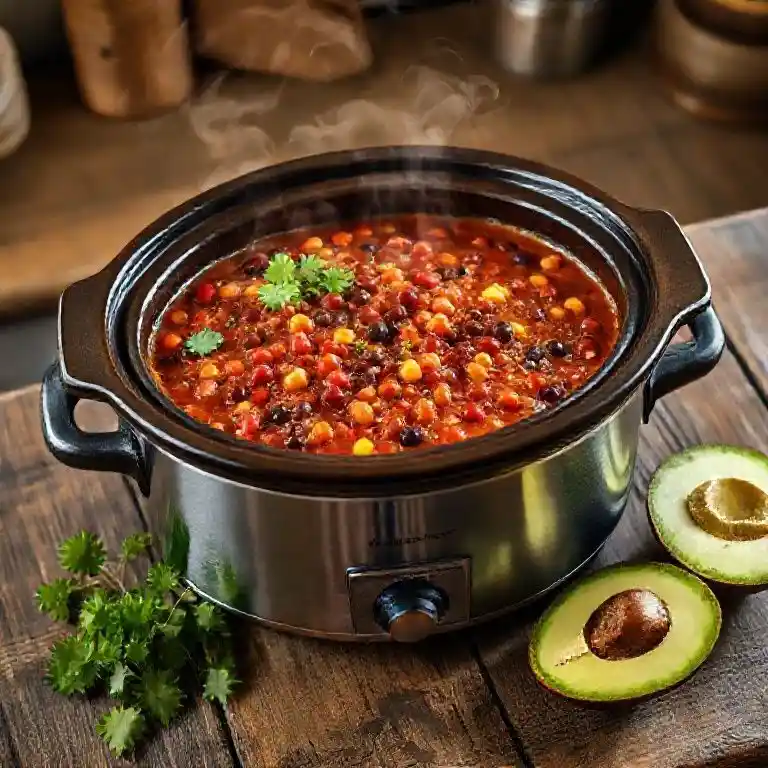
Simple bean and vegetable chili: Combine two cans of drained black beans, two cans of drained kidney beans, one large diced onion, three minced garlic cloves, one diced bell pepper, one can of diced tomatoes, one can of tomato sauce, two tablespoons chili powder, one tablespoon cumin, one teaspoon paprika, and half a teaspoon of salt. Cook on low for six to eight hours. The result is a thick, hearty chili that’s perfect over rice. Top with shredded cheese, sour cream, or avocado.
Lentil and tomato stew: Add two cups of brown lentils (rinsed), one large diced onion, four minced garlic cloves, four cups vegetable broth, one 28-ounce can of crushed tomatoes, two diced carrots, two diced celery stalks, two teaspoons dried thyme, one teaspoon cumin, and salt and pepper to taste. Cook on low for seven to eight hours. This creates a protein-rich stew that’s both filling and incredibly budget-friendly.
Vegetable soup with herbs: Use four cups vegetable broth, one can of diced tomatoes, two diced potatoes, two diced carrots, two diced celery stalks, one diced zucchini, one cup green beans, one diced onion, three minced garlic cloves, one teaspoon dried basil, one teaspoon dried oregano, one bay leaf, and salt and pepper. Cook on low for six to seven hours. This adaptable soup works with whatever vegetables you have on hand.
Vegetarian Crockpot Recipes for Dinner
These substantial vegetarian crockpot recipes are impressive enough for guests yet simple enough for weeknight dinners.
Slow cooker veggie curry: Start with two cans of coconut milk, two tablespoons curry powder, one tablespoon grated fresh ginger, four minced garlic cloves, one diced onion, two diced sweet potatoes, one head of cauliflower cut into florets, one can of chickpeas (drained), one cup frozen peas, and salt to taste. Cook on low for six hours, adding the peas during the final 30 minutes. Serve over basmati rice with naan bread.
Crockpot vegetable enchilada filling: Combine two cans of black beans (drained), two cups frozen corn, one diced bell pepper, one diced onion, one can of diced tomatoes with green chilies, two teaspoons cumin, one teaspoon chili powder, one teaspoon garlic powder, and half a teaspoon of smoked paprika. Cook on low for five to six hours. Use this filling in tortillas with enchilada sauce and cheese, or serve as a burrito bowl over rice.
Hearty potato and chickpea dish: Layer four large diced potatoes, two cans of chickpeas (drained), one diced onion, four minced garlic cloves, one teaspoon turmeric, one teaspoon cumin, one teaspoon paprika, half a teaspoon of coriander, two cups vegetable broth, and salt and pepper. Cook on low for seven to eight hours. The potatoes break down slightly, creating a thick, stew-like consistency. Finish with fresh cilantro and a dollop of yogurt.
Vegan Crockpot Recipes
These completely plant-based vegetarian crockpot recipes prove that vegan cooking can be incredibly flavorful and satisfying.
Vegan slow cooker chili: Use three cans of mixed beans (black, kidney, and pinto), one diced onion, one diced bell pepper, three minced garlic cloves, one can of diced tomatoes, one can of tomato sauce, two tablespoons chili powder, one tablespoon cumin, one teaspoon smoked paprika, one cup frozen corn, and salt to taste. Cook on low for six to eight hours. Top with sliced avocado, chopped cilantro, and a squeeze of lime.
Coconut milk vegetable curry: Combine one can of coconut milk, one cup vegetable broth, two tablespoons red curry paste, one tablespoon soy sauce, one tablespoon brown sugar, one diced sweet potato, one sliced bell pepper, one cup snap peas, one can of bamboo shoots, eight ounces of firm tofu (cubed), and one cup broccoli florets. Cook on low for five to six hours, adding the broccoli and snap peas during the last hour.
Tips for Better Vegetarian Crockpot Results
Small technique adjustments make the difference between good and exceptional vegetarian crockpot recipes.
Layering vegetables the right way: Place harder vegetables like potatoes, carrots, and parsnips at the bottom where they’ll be submerged in liquid and cook more quickly. Softer items like bell peppers and zucchini go in the middle. Delicate vegetables like spinach, peas, and fresh tomatoes should be stirred in during the final 20 to 30 minutes.
When to add dairy or plant cream: Regular dairy milk can curdle during extended cooking in vegetarian crockpot recipes, so save it for the final 30 minutes. Heavy cream, sour cream, and cream cheese are more stable but still benefit from late addition. Coconut milk and other plant-based creams generally handle long cooking better.
Avoiding soggy vegetables: Excess liquid is the enemy of texture in vegetarian crockpot recipes. Vegetables release moisture as they cook, so you typically need less liquid than stovetop recipes. If your finished dish looks watery, remove the lid and cook on high for 30 minutes to reduce the liquid.
Common Mistakes to Avoid
Learning what not to do saves you from disappointing dinners when preparing vegetarian crockpot recipes.
Overcooking soft vegetables: Zucchini, yellow squash, eggplant, and mushrooms become unpleasantly mushy if cooked for the full duration. Add them during the final one to two hours of cooking. I learned this the hard way when my first ratatouille turned into vegetable baby food because I added everything at once.
Adding too much liquid: Crockpots trap moisture, so liquid doesn’t evaporate like it does on the stovetop. Start with less liquid than you think you need—you can always add more, but you can’t remove it easily. As a general rule, reduce stovetop recipe liquids by about one-third when converting to vegetarian crockpot recipes.
Using the wrong size crockpot: Crockpots work best when filled between half and three-quarters full. Too empty, and food dries out or burns. Too full, and nothing cooks properly. For most vegetarian crockpot recipes serving four to six people, a six-quart crockpot is ideal.
How to Store and Reheat Crockpot Meals
Proper storage extends the life of your vegetarian crockpot recipes and maintains quality.
Fridge storage tips: Allow food to cool for no more than two hours before refrigerating. Transfer to shallow, airtight containers rather than storing in the crockpot itself. Most vegetarian crockpot recipes keep for four to five days in the refrigerator. Label containers with the date so you know when to use them.
Freezer-friendly meals: Bean-based chilis, lentil soups, and vegetable stews freeze beautifully for up to three months. Avoid freezing dishes with pasta, potatoes, or dairy, as these don’t thaw well. Leave about an inch of headspace in containers to allow for expansion during freezing.
Best ways to reheat: Stovetop reheating offers the most control—add a splash of broth or water if the food has thickened, and heat over medium-low while stirring occasionally. Microwave reheating works for single portions; use 50 percent power and stir every minute to ensure even heating.
Frequently Asked Questions
Can vegetarian crockpot recipes be frozen?
Most vegetarian crockpot recipes freeze excellently, particularly bean-based chilis, lentil soups, and vegetable stews. The key is avoiding ingredients that don’t freeze well. Potatoes become grainy after freezing, so remove them before freezing or add fresh potatoes when reheating. Properly stored in airtight containers, most frozen meals maintain quality for up to three months.
Do vegetables need to be sautéed first?
No, vegetables don’t require pre-sautéing for vegetarian crockpot recipes, which is part of what makes slow cooking so convenient. However, taking five minutes to sauté onions and garlic in a bit of oil before adding them deepens flavor significantly. It’s not mandatory, but it’s a worthwhile step when you have time.
Can I convert stovetop recipes to crockpot?
Yes, but adjustments are necessary for success with vegetarian crockpot recipes. Reduce liquid by about one-third since crockpots don’t allow evaporation. Extend cooking times significantly—what takes 30 minutes on the stovetop typically needs four to six hours on low. Add delicate vegetables, fresh herbs, and dairy products near the end rather than at the beginning.
Simple Meal Ideas to Try This Week
Ready to put these vegetarian crockpot recipes into practice? Here’s a straightforward approach to incorporating slow cooking into your routine.
Quick weekly meal plan: Start your week by preparing a large batch of basic bean chili on Sunday using one of the vegetarian crockpot recipes above. Serve it Monday over rice, Tuesday in tacos, and Wednesday over baked potatoes. On Thursday morning, start a vegetable curry that’ll be ready when you get home. This approach gives you three home-cooked dinners with only two cooking sessions.
Mix-and-match base recipes: Create versatile bases that transform throughout the week. A simple pot of seasoned beans works in burritos, over nachos, mixed into salads, or as a side dish. Lentil soup becomes heartier with added vegetables or grains. These vegetarian crockpot recipes prevent food boredom while maximizing your cooking efficiency.
Ready to Transform Your Weeknight Dinners?
Vegetarian crockpot recipes offer the perfect solution for anyone juggling busy schedules with the desire to eat wholesome, delicious meals. The beauty lies in their simplicity—a few minutes of morning prep delivers a hot, satisfying dinner with minimal effort.
Your next step is simple: Choose one recipe from this guide that appeals to you, gather the ingredients, and give it a try this week. Start with something basic like the bean chili or lentil stew to build your confidence. Once you experience how easy vegetarian crockpot recipes are, you’ll naturally want to experiment with more complex dishes.
Bookmark this page now so you can reference these vegetarian crockpot recipes whenever you need dinner inspiration. Which recipe are you most excited to try first? Drop a comment below and let me know—I’d love to hear about your slow cooking adventures!